
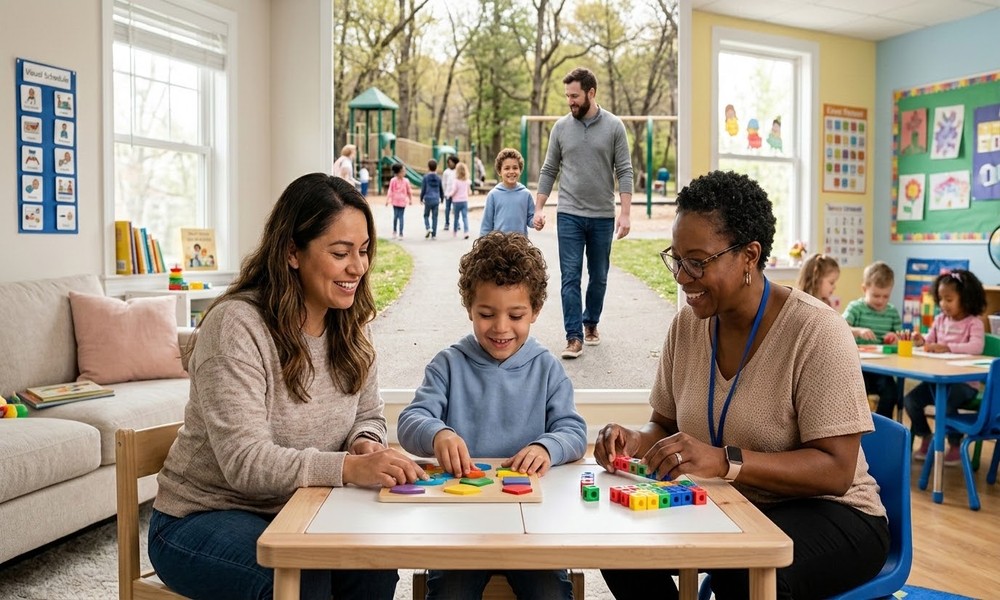
Supporting a child with autism takes more than one approach in one setting. It is an ongoing process that touches home life, school, healthcare, and community experiences. Children on the autism spectrum often do best when the strategies used to support their growth stay consistent across these environments. That consistency helps reinforce learning, reduce confusion, and create a stronger sense of stability.
Behavioral therapy, especially when used across multiple settings, can play an important role in helping children build communication, social, and daily living skills. When caregivers, educators, and healthcare providers work together with shared goals and similar strategies, children are more likely to make progress that carries into everyday life.
Understanding Autism and Developmental Needs
Autism spectrum disorder, or ASD, is a neurodevelopmental condition that affects how a person communicates, interacts socially, and processes information. Every child with autism has a different mix of strengths and challenges. Some may have strong verbal skills but struggle with social cues, while others may be nonverbal and need more structured support.
Because autism looks different from one child to the next, support should be individualized. Behavioral therapy, especially Applied Behavior Analysis, or ABA, is one common approach used to help children develop skills. It focuses on reinforcing positive behaviors and teaching new ones in manageable steps.
Early intervention can make a meaningful difference. Research has consistently shown that children who receive structured support early in life often build stronger communication and adaptive skills. Still, progress depends not only on starting early but also on maintaining support across environments.
The Role of Home-Based Support
Home is often where children feel safest and most comfortable, which makes it a valuable place for learning. Parents and caregivers can reinforce skills introduced in therapy by building them into everyday routines like mealtime, playtime, and bedtime.
In-home behavioral support gives therapists a chance to observe a child in a familiar setting. That can lead to strategies that better reflect day-to-day challenges. A therapist might help a child practice asking for items during snack time or build smoother routines for transitioning from one activity to another.
Programs like those offered by Sunshine Advantage focus on in-home and school-based ABA support, helping families use consistent strategies throughout the day. This kind of support can strengthen a child’s ability to apply skills outside structured therapy sessions.
Family involvement matters. When caregivers understand and use behavioral strategies, they become active partners in their child’s development. That can improve outcomes and help families feel more confident as challenges come up.
Creating Consistency Between Home and School
Children with autism often respond well to predictability. When expectations and responses are very different at home and at school, it can create confusion and frustration. Consistency in communication, behavior expectations, and reinforcement helps children understand what is expected of them.
Strong collaboration between parents and educators is essential. Regular communication, shared goals, and coordinated plans help everyone work toward the same outcomes. For example, if a child is learning to use visual schedules at school, using a similar system at home can reinforce that skill.
School-based behavioral support also plays an important role. Structured settings with trained professionals can create opportunities for social interaction, communication practice, and academic growth. When those efforts line up with what happens at home, progress is more likely to last.
The Importance of School-Based Behavioral Therapy
School is not just a place for academics. It is also where children learn to navigate relationships, follow routines, and adjust to group settings. For children with autism, those experiences can be both helpful and challenging.
School-based ABA therapy brings behavioral support into the classroom. That may include one-on-one assistance, small-group interventions, or collaboration with teachers to adjust instructional methods. The goal is to help children take part more fully in school while building practical life skills.
When strategies stay consistent across home and school, children often have an easier time carrying skills from one setting to another. If a child learns to ask for help appropriately in therapy, practicing that same skill in the classroom reinforces its value.
Healthcare providers such as Kimball Health Services may also support families by addressing broader developmental and medical needs. Access to family medicine and primary care can complement behavioral interventions and contribute to more well-rounded support.
Early Support Systems and Development
The foundation for a child’s development begins early, sometimes even before a formal diagnosis. Early parent support systems can play an important role in identifying developmental concerns and offering guidance during the first years of life.
Access to professionals who specialize in early childhood development can help parents recognize signs of autism and seek appropriate support. That early awareness gives families a chance to start helpful strategies sooner.
Services such as those provided by Corporate Lactation Services show the value of early parent support systems. While these programs mainly focus on lactation consulting and workplace lactation services, they can still be part of a broader network of care that supports both parent and child during key developmental stages.
When families feel supported early on, they are often more prepared to take an active role in their child’s development, which can help set the stage for long-term progress.
Extending Support Beyond Structured Environments
Home and school are central parts of a child’s development, but real-world experiences matter too. Community settings like parks, stores, and social gatherings give children opportunities to practice skills in less controlled environments.
These situations can be difficult for children with autism because of sensory input, unpredictability, and social demands. Still, with preparation and consistent strategies, they can become valuable opportunities for growth.
Parents and caregivers can use techniques from therapy to guide behavior in these settings. Practicing turn-taking during a game at home, for example, can help a child use that same skill with peers at the park. Visual supports and clear instructions can also make unfamiliar situations easier to manage.
The goal is to help children build confidence and independence. As they learn to use their skills in different settings, they become better prepared for everyday challenges.
Supporting Families and Caregivers
Caring for a child with autism can be demanding, both emotionally and physically. Families often balance therapy appointments, school meetings, and daily responsibilities while trying to maintain a sense of routine.
Support services for caregivers can make a real difference. These may include respite care, counseling, and help with daily responsibilities. When caregivers feel supported, they are often better able to provide steady, effective care for their children.
Organizations like Alpenglow Homecare in Missoula offer family support services, including options for paid family caretakers. This kind of support can ease burnout and give families more capacity to focus on positive, structured interactions with their child.
Giving caregivers the right knowledge and resources also helps them advocate for their child in school and healthcare settings. That advocacy can be key to making sure children receive the services and accommodations they need.
The Power of Consistent Behavioral Strategies
Consistency is what ties every part of support together for children with autism. When behavioral strategies are used across home, school, and community settings, children receive clear and predictable guidance.
That consistency reinforces learning. Skills practiced in one environment are more likely to carry into another. It can also reduce anxiety by creating a stronger sense of structure and familiarity.
Reaching that level of consistency takes collaboration. Parents, educators, therapists, and healthcare providers need to communicate regularly and stay aligned in their approach. Shared goals, consistent reinforcement, and ongoing review of progress all matter.
Over time, that coordinated effort can lead to meaningful improvements in communication, social interaction, and daily living skills. Children gain tools that help them move through the world with greater confidence and independence.
Building a Supportive Network
No one person or service can meet every need of a child with autism. A strong support network matters. That network may include family members, teachers, therapists, healthcare providers, and community organizations.
Each person in that network brings a different perspective and set of skills. When those perspectives come together, they create a more complete approach to care. Regular communication and collaboration help keep everyone aligned.
Support networks also give families emotional reassurance. Knowing that trusted people and resources are available can make the journey feel more manageable.
Conclusion
Supporting children with autism calls for a coordinated and consistent approach across multiple environments. When behavioral strategies are reinforced at home, at school, and in the community, children are better able to build and retain essential skills.
Consistency does more than improve outcomes. It creates a stable, predictable environment where children can grow with confidence. When caregivers, educators, and professionals work together, they can help children with autism reach their full potential and move through the world with greater independence.